


Christmas Negroni
The Christmas Negroni recipe
The Christmas Negroni takes the bittersweet backbone of the classic Negroni and wraps it in the warmth of cinnamon and orange, turning the aperitivo hour into something closer to a fireside ritual. Campari’s bitter red core stays firmly in place, but a whisper of cinnamon syrup and orange bitters gives the drink a spiced, resinous edge that feels unmistakably wintry. It’s the kind of festive Negroni that suits a room lit by candles and conversation, distinctive enough to become the cocktail people ask for again each December.
| 1 Part 1 Oz 30 Ml 3 Cl | Campari |
| 1 Part 1 Oz 30 Ml 3 Cl | Gin |
| 1 Part 1 Oz 30 Ml 3 Cl | Sweet Vermouth |
| dash Part dash Oz ~1 Ml dash Cl | Cinnamon Syrup |
| dash Part dash Oz ~1 Ml dash Cl | Orange Bitters |
| 1 | Fill a mixing glass with ice and add the Campari, gin, sweet vermouth, cinnamon syrup, and orange bitters. |
| 1 | Fill a mixing glass with ice and add the Campari, gin, sweet vermouth, cinnamon syrup, and orange bitters. |
| 1 | Fill a mixing glass with ice and add the Campari, gin, sweet vermouth, cinnamon syrup, and orange bitters. |
| 1 | Fill a mixing glass with ice and add the Campari, gin, sweet vermouth, cinnamon syrup, and orange bitters. |
| 2 | Stir with purpose until the mixture is well chilled and properly diluted. |
| 2 | Stir with purpose until the mixture is well chilled and properly diluted. |
| 2 | Stir with purpose until the mixture is well chilled and properly diluted. |
| 2 | Stir with purpose until the mixture is well chilled and properly diluted. |
| 3 | Strain over a single large ice cube in a rocks glass. |
| 3 | Strain over a single large ice cube in a rocks glass. |
| 3 | Strain over a single large ice cube in a rocks glass. |
| 3 | Strain over a single large ice cube in a rocks glass. |
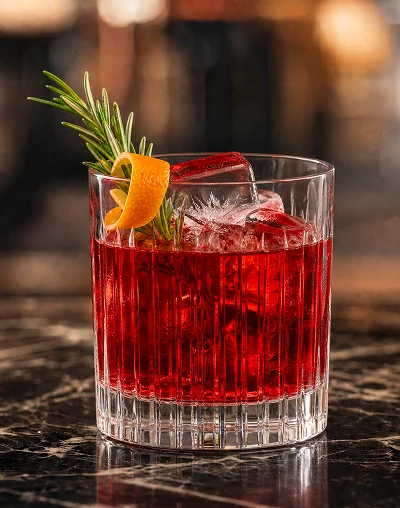
| 4 | Garnish with a rosemary sprig and a twist of orange peel, expressed over the glass before resting it on the rim. |
| 4 | Garnish with a rosemary sprig and a twist of orange peel, expressed over the glass before resting it on the rim. |
| 4 | Garnish with a rosemary sprig and a twist of orange peel, expressed over the glass before resting it on the rim. |
| 4 | Garnish with a rosemary sprig and a twist of orange peel, expressed over the glass before resting it on the rim. |
Serve this Christmas Negroni cocktail in an Old Fashioned or rocks glass over one large, slow-melting ice cube — it keeps the spice and bitterness intact without watering down the drink too quickly. This is a pour for the pre-dinner hour, when guests are still in coats and the table isn’t quite set, and the rosemary’s scent can do its work before the first sip. Pour it as the room settles, not as a nightcap; its bitter-spiced structure is built to open the appetite, not close the evening.
Planning to serve campari drinks to guests?
Find out how many bottles you’ll need.
Number of people
Cocktails per person

Christmas Negroni history
The Christmas Negroni belongs to the wide family of modern Negroni riffs that bartenders began building once the original three-way split of gin, Campari, and sweet vermouth became a template rather than a fixed formula. There’s no single documented moment of invention; instead, the drink developed organically as seasonal bars looked for a way to dress the Negroni in holiday character without abandoning its bitter identity. Cinnamon syrup and orange bitters were the natural additions, echoing the mulled wines and spiced punches long associated with European winter drinking. What makes this Christmas Negroni recipe recognizable within that lineage is restraint: the spice supports Campari’s bitterness rather than masking it, keeping the drink an aperitivo at heart even as it leans into festive flavor.
When to Drink an Christmas Negroni
This is a December glass, poured when the light goes early and the table is being laid for a long dinner ahead. Reach for a Xmas Negroni at a holiday gathering, by the fireplace, or as the first drink handed to guests arriving out of the cold — the rosemary and orange peel announce themselves before anyone takes a sip. It sits comfortably in the aperitivo hour, sharpening appetites for the meal to come rather than easing anyone toward bed.
Christmas Negroni VS Negroni
Both drinks share the same equal-parts backbone of gin, Campari, and sweet vermouth, so the comparison comes down to what's layered on top. The classic Negroni is unwavering and bitter, a clean statement drink with no seasonal accent, while the Christmas Negroni cocktail softens that edge with cinnamon and orange bitters for a warmer, more aromatic profile. Choose the original for a year-round aperitivo and the festive Negroni when the occasion calls for something spiced and celebratory.
Christmas Negroni

VS
Negroni

Most Asked Questions
Can I make variations of the Christmas Negroni?
Yes — the spiced structure invites experimentation. Some bartenders swap the gin for a barrel-aged or juniper-forward style like Bulldog to add depth, while others use a richer sweet vermouth such as Del Professore Rosso for a more herbal, fig-toned backbone. Star anise or a clove-studded orange peel can replace or join the rosemary for an even more wintry garnish.
What’s the best way to make cinnamon syrup for a Christmas Negroni recipe?
Simmer equal parts sugar and water with a few broken cinnamon sticks for about ten minutes, then let the mixture cool and infuse for at least an hour before straining. The goal is a syrup that reads as warm spice rather than sweetness, so a light hand with the cinnamon stick count matters more than steeping time. Store it in the refrigerator and it will keep for a couple of weeks, ready whenever the occasion calls for a festive Negroni.
Are there other festive Negroni cocktail recipes worth trying alongside this one?
Within the wider Negroni family, drinks like the Autumn Negroni or Rosemary Negroni share the same instinct for seasoning the classic template with herbal or spiced accents. They make a natural pairing on a holiday drinks menu alongside a Christmas Negroni, each offering a slightly different route to the same bitter-forward, aromatic territory.
If You Like Christmas Negroni, Try These Cocktails Too
 AI-generated content: This page contains content generated with the support of Artificial Intelligence.