


Autumn Negroni
The Autumn Negroni recipe
The Autumn Negroni takes the familiar Negroni silhouette and pushes it deeper into bitter, herbal territory, layering Cynar’s artichoke-and-caramel edge and Fernet’s cooling menthol snap beneath Campari’s citrus-bitter backbone. It belongs to the same evening ritual as its parent drink — that unhurried hour before dinner when a glass in hand signals the day is winding down — but reads darker and more contemplative, suited to shorter days and the first cold snap. Six ingredients working in concert rather than the classic three make this Autumn Negroni recipe instantly recognizable to anyone who knows the original well.
| 2 Part 2 Oz 60 Ml 6 Cl | Gin |
| 0.5 Part 0.5 Oz 15 Ml 1.5 Cl | Cynar |
| 0.75 Part 0.75 Oz 22.5 Ml 2.25 Cl | Sweet Vermouth |
| 0.25 Part 0.25 Oz 7.5 Ml 0.75 Cl | Fernet |
| 0.5 Part 0.5 Oz 15 Ml 1.5 Cl | Campari |
| 1 Part ~0.03 Oz ~1 Ml ~0.1 Cl | Orange bitters |
| 1 Part ~0.03 Oz ~1 Ml ~0.1 Cl | Peychaud's Bitters |
| 1 | Fill a mixing glass with ice and add the gin, Cynar, sweet vermouth, Fernet, Campari, orange bitters and Peychaud's Bitters. |
| 1 | Fill a mixing glass with ice and add the gin, Cynar, sweet vermouth, Fernet, Campari, orange bitters and Peychaud's Bitters. |
| 1 | Fill a mixing glass with ice and add the gin, Cynar, sweet vermouth, Fernet, Campari, orange bitters and Peychaud's Bitters. |
| 1 | Fill a mixing glass with ice and add the gin, Cynar, sweet vermouth, Fernet, Campari, orange bitters and Peychaud's Bitters. |
| 2 | Stir with purpose until the outside of the glass turns cold and the dilution softens the bitterness. |
| 2 | Stir with purpose until the outside of the glass turns cold and the dilution softens the bitterness. |
| 2 | Stir with purpose until the outside of the glass turns cold and the dilution softens the bitterness. |
| 2 | Stir with purpose until the outside of the glass turns cold and the dilution softens the bitterness. |
| 3 | Strain over a single large ice cube in a rocks glass. |
| 3 | Strain over a single large ice cube in a rocks glass. |
| 3 | Strain over a single large ice cube in a rocks glass. |
| 3 | Strain over a single large ice cube in a rocks glass. |
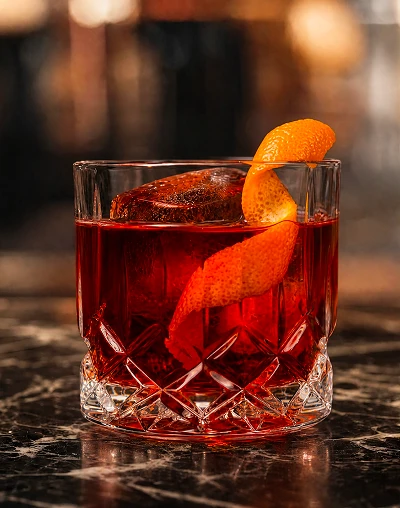
| 4 | Twist a wide piece of orange peel over the surface to release its oils, then drop it in as garnish. |
| 4 | Twist a wide piece of orange peel over the surface to release its oils, then drop it in as garnish. |
| 4 | Twist a wide piece of orange peel over the surface to release its oils, then drop it in as garnish. |
| 4 | Twist a wide piece of orange peel over the surface to release its oils, then drop it in as garnish. |
Pour it in a Negroni Campari glass over one large, slow-melting ice cube — this cocktail carries enough bitter complexity that it deserves controlled dilution rather than a flurry of small cubes. Serve it as the evening cools, somewhere between the last light of the afternoon and the moment the table is set for dinner. Let guests take their time with it; the layers of Cynar and Fernet reveal themselves more fully as the drink warms slightly in the glass.
Planning to serve campari drinks to guests?
Find out how many bottles you’ll need.
Number of people
Cocktails per person

Autumn Negroni history
The Autumn Negroni belongs to the wave of Negroni riffs that emerged as bartenders began treating the equal-parts template as a starting point rather than a fixed formula. There is no single documented inventor or date attached to this particular build, so it’s more accurate to describe it as part of a broader lineage — cocktails that keep the Negroni’s gin-vermouth-bitter structure while swapping or adding modifiers to shift its season and mood. Here, Cynar and Fernet stand in alongside Campari, trading some of the original’s bright citrus snap for artichoke bitterness and menthol depth, while a double dash of orange and Peychaud’s bitters adds spice at the finish. The result reads as a deliberately cooler-weather cousin of the classic, built by bartenders working within the modern Negroni-variation tradition rather than inventing something wholly separate from it.
When to Drink an Autumn Negroni
This is a drink for the aperitivo hour once the light starts going gold and early rather than late — the first cool evening that calls for something with more weight than a summer spritz. Reach for it before a dinner built around roasted vegetables, game, or aged cheeses, where its bitter, herbal register won’t get lost. It also holds its own as a slow, solitary pour on a quiet autumn night, the kind of drink that rewards sipping rather than rushing.
Autumn Negroni VS Negroni
Both drinks share the same gin-forward, bittersweet DNA, but the Autumn Negroni cocktail asks more of the palate, trading some of the classic's bright orange snap for the earthy depth of Cynar and the cooling bite of Fernet. The Negroni remains the benchmark aperitivo — direct, balanced, endlessly repeatable — while its autumn counterpart is the version you pour when the season, and the mood, calls for something more layered. Strength-wise the two sit close together, but the drinking experience diverges: one is immediate, the other unfolds.
Autumn Negroni

VS
Negroni
 />
/>
Drinking experience
Straightforward sipping with consistent, familiar bitter-sweet balanceMost Asked Questions
What are the best bitters for an Autumn Negroni?
The recipe calls for a dash each of orange bitters and Peychaud's Bitters, and both earn their place. Orange bitters echo Campari's citrus register while sharpening the top note, and Peychaud's brings a faint anise-and-spice color that suits the drink's cooler, more herbal profile. If you're experimenting, a dash of aromatic bitters can work as a substitute for Peychaud's, though you'll lose some of that characteristic red-fruit lift.
Are there variations of the Autumn Negroni cocktail?
Yes — because it's already a variation itself, the Autumn Negroni invites further tweaking. Some bartenders swap the gin for an aged or barrel-rested version to add oak and vanilla, or adjust the Fernet-to-Cynar ratio to dial the bitterness up or down. Others build it into a larger-format punch for gatherings, since its bitter complexity holds up well over extended sipping.
What garnish works best for an Autumn Negroni?
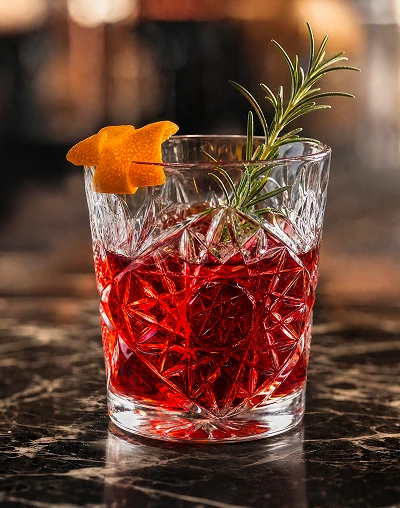
An orange twist is the standard garnish, expressed over the glass so its oils meet the drink's surface before it's dropped in. For a more seasonal touch, some bartenders add a small sprig of rosemary or a strip of dried orange peel alongside the twist, which plays well with the Fernet's herbal notes without overwhelming the drink's balance.
If You Like Autumn Negroni, Try These Cocktails Too
 AI-generated content: This page contains content generated with the support of Artificial Intelligence.