


Mezcal Negroni
The Mezcal Negroni recipe
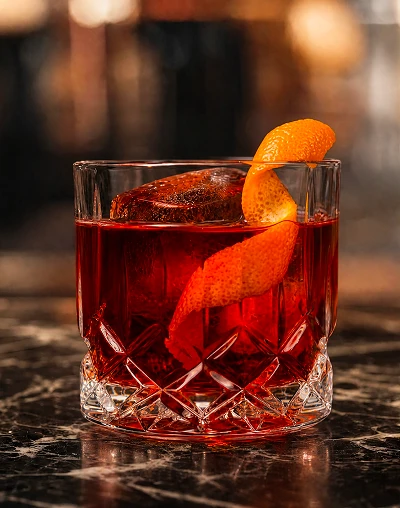
The Mezcal Negroni takes the classic equal-parts formula and threads it with smoke, trading gin’s juniper snap for the earthy, agave-driven depth of mezcal. It keeps the bittersweet backbone that makes the Negroni the reigning symbol of Italian aperitivo culture, but the finish lingers longer, drier, tinged with char. Among the many Negroni variations that bartenders have built over the years, this one stands out for how completely a single substitution can shift the drink’s character while keeping its architecture intact.
| 1 Part 1 Oz 30 Ml 3 Cl | Mezcal |
| 1 Part 1 Oz 30 Ml 3 Cl | Campari |
| 1 Part 1 Oz 30 Ml 3 Cl | Sweet Vermouth |
| 1 | Add the mezcal, Campari, and sweet vermouth to a mixing glass filled with ice. |
| 1 | Add the mezcal, Campari, and sweet vermouth to a mixing glass filled with ice. |
| 1 | Add the mezcal, Campari, and sweet vermouth to a mixing glass filled with ice. |
| 1 | Add the mezcal, Campari, and sweet vermouth to a mixing glass filled with ice. |
| 2 | Stir until the mixture is well chilled and slightly diluted, then strain over a large ice cube into a rocks glass. |
| 2 | Stir until the mixture is well chilled and slightly diluted, then strain over a large ice cube into a rocks glass. |
| 2 | Stir until the mixture is well chilled and slightly diluted, then strain over a large ice cube into a rocks glass. |
| 2 | Stir until the mixture is well chilled and slightly diluted, then strain over a large ice cube into a rocks glass. |
| 3 | Garnish with an orange slice. |
| 3 | Garnish with an orange slice. |
| 3 | Garnish with an orange slice. |
| 3 | Garnish with an orange slice. |
Serve this in the Negroni Campari glass over a single large-format ice cube, which melts slowly enough to keep the smoke and bitterness in balance as the drink opens up. Pour it at the start of the evening, when the aperitivo hour calls for something with more weight and slower drinking than a lighter cocktail. This is a sipping drink — give it time between sips to let the mezcal’s smoke unfold against the Campari’s bitter edge.
Planning to serve campari drinks to guests?
Find out how many bottles you’ll need.
Number of people
Cocktails per person

Mezcal Negroni history
The Mezcal Negroni belongs to the wave of Negroni variations that emerged as bartenders began treating the original 1919 Florentine formula as a template rather than a fixed recipe. Its exact point of origin isn’t documented, but its lineage is clear: it follows the same logic as the Boulevardier and the Kingston Negroni, swapping the base spirit while keeping Campari and sweet vermouth as the anchors of the drink. Mezcal’s rise in international bar culture through the 2000s and 2010s gave bartenders a smoky, agave-forward alternative to gin, and the Negroni’s rigid one-to-one-to-one structure made it an obvious canvas for the experiment. Today the Mezcal Negroni recipe is a fixture on modern cocktail menus, prized precisely because it respects the original’s proportions while completely reworking its character.
When to Drink an Mezcal Negroni
This is a drink for the cooler months, or for an aperitivo hour that wants a little more gravity than usual — an evening with grilled vegetables, charcuterie, or something off the smoker rather than a plate of crudo. Reach for it at the start of a long dinner among people who already know their way around a Negroni and want to see the formula pushed somewhere unexpected. It also holds its own after dark, when a lighter aperitivo would feel thin against a rich, smoke-tinged meal.
Mezcal Negroni VS Negroni
The classic Negroni is built on gin, so its character leans botanical and bright, with juniper and citrus notes cutting through the Campari's bitterness. The Mezcal Negroni keeps the same bittersweet frame but replaces that brightness with smoke and earth, making it a heavier, more contemplative drink. Both sit at the same strength and both belong to the same aperitivo ritual, but they suit different moods and, often, different seasons.
Mezcal Negroni

VS
Negroni

Most Asked Questions
What’s the best mezcal for a Negroni?
An espadín-based mezcal is the most reliable choice, since its balance of smoke and vegetal sweetness plays well with Campari's bitterness without overwhelming it. Look for a joven mezcal with moderate smoke rather than an intensely peaty bottling, which can compete with the vermouth instead of complementing it. Bartenders experimenting with Mezcal Negroni variations often reserve smokier or more mineral mezcals for a half-measure, blending them with gin to dial back the intensity.
What’s the best vermouth for a Mezcal Negroni?
A classic Italian sweet vermouth, such as White Vermouth Del Professore's red-style expression, gives the drink the herbal depth and gentle sweetness it needs to stand up to mezcal's smoke. Vermouths with pronounced dried-fruit and spice notes tend to work better here than lighter, more floral styles, since they hold their ground against the agave character rather than disappearing into it.
Can I make a Mezcal Negroni with a mix of mezcal and gin?
Yes — many bars split the spirit between mezcal and gin, often in a 1:1 ratio within the total pour, to bring smoke into the glass without letting it dominate. This half-and-half approach is one of the most common mezcal negroni variations, offering a gentler entry point for anyone new to mezcal's more assertive character.
If You Like Mezcal Negroni, Try These Cocktails Too

 AI-generated content: This page contains content generated with the support of Artificial Intelligence.