


Cardinale
The Cardinale recipe
The Cardinale cocktail takes the familiar architecture of a Negroni and turns the dial toward austerity, swapping sweet vermouth for dry and sharpening the whole profile into something leaner, more bitter, and distinctly bracing. It belongs to that select circle of IBA-listed drinks built for the hour before dinner, when appetite and conversation both need a little provocation. Where its more famous relative leans into roundness, the Cardinale drink stays lean and citrus-edged, a cocktail for those who already know their way around a bar cart.
| 1 Part 1 Oz 30 Ml 3 Cl | Gin |
| 1 Part 1 Oz 30 Ml 3 Cl | Campari |
| 1 Part 1 Oz 30 Ml 3 Cl | Dry Vermouth |
| 1 | Fill a mixing glass with ice cubes and pour in the gin, Campari, and dry vermouth. |
| 1 | Fill a mixing glass with ice cubes and pour in the gin, Campari, and dry vermouth. |
| 1 | Fill a mixing glass with ice cubes and pour in the gin, Campari, and dry vermouth. |
| 1 | Fill a mixing glass with ice cubes and pour in the gin, Campari, and dry vermouth. |
| 2 | Stir well until the outside of the glass turns cold to the touch, roughly 20-30 seconds. |
| 2 | Stir well until the outside of the glass turns cold to the touch, roughly 20-30 seconds. |
| 2 | Stir well until the outside of the glass turns cold to the touch, roughly 20-30 seconds. |
| 2 | Stir well until the outside of the glass turns cold to the touch, roughly 20-30 seconds. |
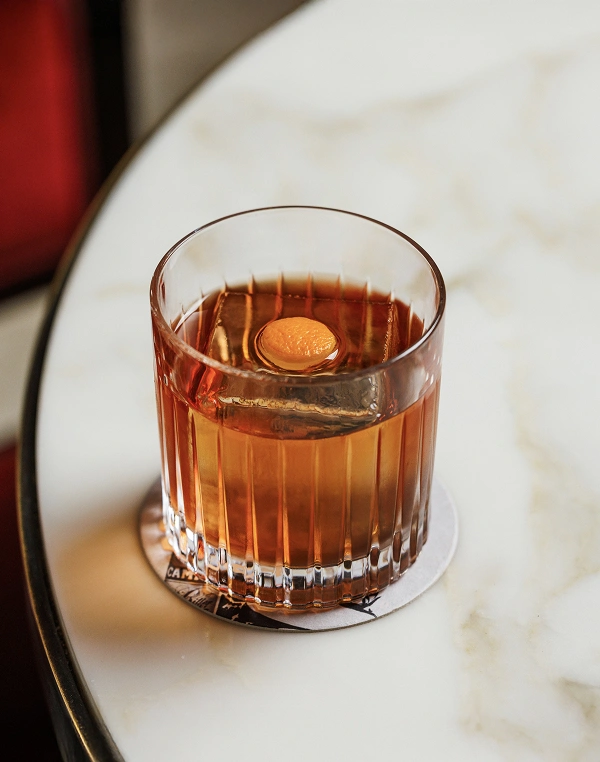
| 3 | Strain into a chilled Old Fashioned glass over a single large ice chunk. |
| 3 | Strain into a chilled Old Fashioned glass over a single large ice chunk. |
| 3 | Strain into a chilled Old Fashioned glass over a single large ice chunk. |
| 3 | Strain into a chilled Old Fashioned glass over a single large ice chunk. |
| 4 | Express a lemon zest over the surface and drop it in as garnish. |
| 4 | Express a lemon zest over the surface and drop it in as garnish. |
| 4 | Express a lemon zest over the surface and drop it in as garnish. |
| 4 | Express a lemon zest over the surface and drop it in as garnish. |
Serve the Cardinale in a sturdy Old Fashioned glass, over one large ice cube rather than a handful of smaller ones — the slower dilution keeps the drink’s dry, bitter core intact for longer. This is a drink for sipping slowly at the start of the evening, ideally in the company of something briny or cured to meet its edge. Pour it cold, straight from the mixing glass, and let the lemon oils do their work before the first sip.
Planning to serve campari drinks to guests?
Find out how many bottles you’ll need.
Number of people
Cocktails per person

Cardinale history
The Cardinale cocktail history is tied closely to that of the Negroni, of which it reads as a drier, more austere cousin: same gin-and-Campari backbone, but sweet vermouth swapped for dry. No single bartender, city, or date is documented as its point of origin, and its story is best understood as part of the broader lineage of Italian bittersweet aperitivi that took shape across the twentieth century, alongside the Negroni, the Americano, and the Milano-Torino. The International Bartenders Association lists it among its official cocktails, which has helped standardize the recipe and keep it in circulation on serious cocktail menus. What’s certain is the logic behind it: replace the sweetness of red vermouth with the herbal snap of dry vermouth, and the whole drink shifts from convivial to contemplative.
When to Drink a Cardinale
Reach for a Cardinale at the true start of aperitivo hour, before the appetite has fully woken up and the palate still wants sharpening rather than soothing. It suits late afternoon light on a terrace as much as a quiet bar counter in early autumn, when the air has turned and a rounder, sweeter drink would feel out of step. This is a cocktail for solitary reflection or for the company of someone who already appreciates bitterness as a virtue, not a flaw to be masked.
Cardinale VS Negroni
The Cardinale vs Negroni question comes down to one ingredient and a considerable shift in character: both share the same gin-and-Campari foundation, but the Cardinale's dry vermouth strips away the caramel sweetness that defines its relative, leaving something drier, more herbal, and more insistent on the palate. The Negroni remains the more sociable, rounder choice for a first drink of the evening; the Cardinale asks a little more of the drinker and rewards those who prefer their bitterness unfiltered.
Cardinale

VS
Negroni

Most Asked Questions
Are there common variations on the Cardinale cocktail recipe?
Some bartenders swap in a more botanical or navy-strength gin to push the bitterness further, while others use a fino sherry in place of a portion of the vermouth for added salinity. A few modern lists build a sparkling variant with a splash of soda, moving the Cardinale closer to a session-strength aperitivo. The classic three-way equal-parts ratio, however, remains the benchmark against which every variation is judged.
What’s the best gin for a Cardinale cocktail?
A London Dry gin with a firm juniper backbone holds its own against the Campari and dry vermouth without disappearing into the mix. Bartenders looking for extra dimension often reach for a slightly more citrus-forward or herbaceous gin, since the botanicals have room to show through in a drink this dry. Avoid anything too delicate or floral — the Cardinale rewards structure over subtlety.
Why is it called the Cardinale?
The name's exact origin isn't documented, though it fits a naming pattern common to Italian aperitivo cocktails, where titles often nod to color, status, or ecclesiastical imagery rather than a specific person or place. The deep garnet hue Campari lends the glass invites the obvious association with a cardinal's robes, though this remains an interpretation rather than a confirmed fact. What's clear is that the name has stuck within IBA circles as shorthand for the Negroni's drier sibling.
If You Like Cardinale, Try These Cocktails Too

 AI-generated content: This page contains content generated with the support of Artificial Intelligence.